
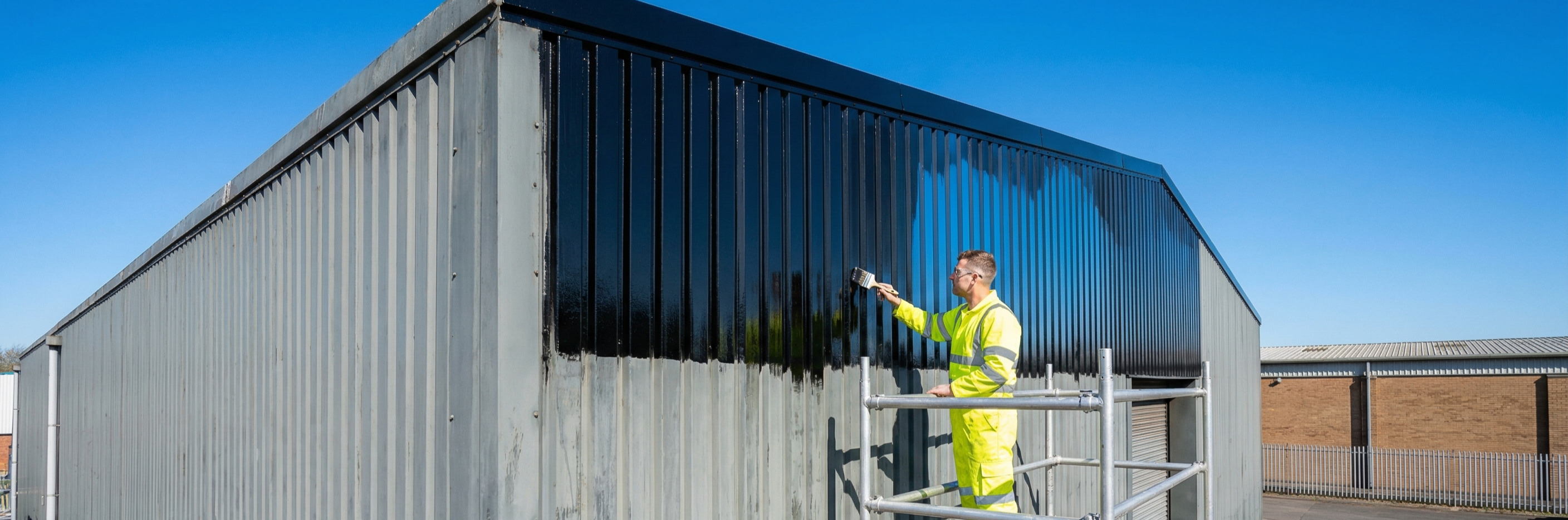
Because oil-based gloss cladding paints dry through a slow process of solvent evaporation followed by chemical oxidation, they remain vulnerable to environmental damage for much longer than water-based alternatives. If it rains or if heavy dew falls on the paint before it has reached its initial set, the water physically disrupts the resin as it cures. This results in a permanent loss of gloss, surface pitting, and a compromised protective barrier that can lead to premature rusting.
-
Extended Open Time: Oil-based gloss can take 6 to 12 hours to become rain-safe and up to 24 hours to dry hard, depending on the temperature and airflow.
-
Mechanical Damage: Raindrops hitting a wet oil-based film create craters and "wash-off" spots, exposing the bare metal substrate beneath.
-
The Solution: You must secure a 24-hour window of clear, dry weather and avoid painting late in the afternoon when humidity rises and temperatures drop.
→ Browse our High-Gloss Oil-Based Cladding Paints
The Science of the Slow Dry: Solvent vs. Oxidation
To understand the weather risk, you have to look at how oil-based paint transforms from a liquid to a solid. While water-based paints dry relatively quickly as the water evaporates, oil-based gloss undergoes a two-stage process.
First, the solvents must evaporate. Once the solvents are gone, the remaining resin must react with oxygen in the air - a process called autoxidation - to harden. This chemical reaction is significantly slower than simple evaporation. During this entire window, the paint film is "open" and soft. If moisture is introduced during this stage, it doesn't just sit on top; it disrupts the chemistry of the curing resin.
The Consequences of Moisture Exposure
If the weather turns before your cladding paint has set, you will likely face one of the following three technical failures:
1. Surface Emulsification and Gloss Loss
Oil and water do not mix. If heavy mist or rain hits a wet oil-based gloss, the water attempts to integrate with the surface of the resin. This creates a microscopic "orange peel" or matted texture. Once the paint finally dries, the high-gloss finish is replaced by a dull, patchy appearance because the surface is no longer smooth enough to reflect light uniformly.
2. Pitting and Wash-Off
Unlike thicker masonry paints, cladding gloss is often applied in thinner, smoother layers for a professional finish. A heavy rainstorm can physically displace the wet paint, causing it to "run" or wash off the vertical sheets of cladding. This leaves pits and thin spots in the coating where the anti-corrosive protection is virtually non-existent.
3. Adhesion Failure
Metal cladding is highly conductive. If rain falls, the temperature of the metal drops rapidly. This can cause the underside of the paint film to "chill," slowing the bond-forming process to a halt. If the paint hasn't yet anchored to the metal or the primer, the introduction of water can cause the entire film to delaminate or peel in sections once it eventually dries.
The Professional Weather Checklist
To ensure your cladding project is a success, you must look beyond the current weather and check the forecast for the full 24-hour curing window.
-
The 10:00 AM Rule: Start painting as soon as the morning dew has fully evaporated from the cladding. This gives the paint the maximum amount of daylight and warmth to reach a rain-safe state before the evening humidity returns.
-
Avoid the Afternoon Drop: In the UK, the most common time for cladding projects to fail is late afternoon. As the temperature drops toward the Dew Point, the air becomes saturated. This stops solvent evaporation entirely, leaving the paint tacky and vulnerable to moisture all night long.
-
Temperature Stability: Ideally, apply paint when temperatures are between 10°C and 25°C. Extreme heat can cause the paint to "skin over" too fast, trapping solvents beneath, while cold weather stops the oxidative curing process altogether.
Honest Trade-offs: Speed vs. Protection
The "Fast-Dry" Trap: While water-based paints are rain-safe in an hour, they often lack the superior moisture-shunning properties and chemical resistance of a traditional oil-based system. Choosing oil-based gloss is a commitment to a superior finish, but it requires much stricter adherence to the weather window.
The Sunday Afternoon Risk: Many DIYers try to "finish the job" at 4:00 PM on a Sunday. By 6:00 PM, the temperature drops and dew falls. Because the paint hasn't even begun its oxidative cure, the finish is ruined by 8:00 PM. If you cannot finish by early afternoon, it is always better to wait for the next dry day.
Wash-Off Warning: If it does rain on your wet oil paint, do not try to wipe or "fix" it while it is wet. Let it dry as best it can for 48-72 hours. Once hard, you will need to sand back the damaged, pitted areas to a smooth finish and apply a fresh topcoat to restore the gloss and protection.
Share:
Surface Rust on Metal Cladding: Why Oxide Primer is Essential