System Overview
For concrete and asphalt surfaces used in traffic management areas, single pack line marking coatings provide a practical method of applying high-visibility markings without the complexity of multi-component systems. These coatings are supplied as one-component materials that cure through solvent evaporation or moisture reaction, allowing straightforward application for routine marking and maintenance work.
Operational environments such as car parks, warehouses, pedestrian walkways, and service yards rely on clearly visible markings to organise traffic movement and identify safety zones. Single pack line marking paints create defined lines and coloured areas that remain visible under pedestrian use and light vehicle traffic.
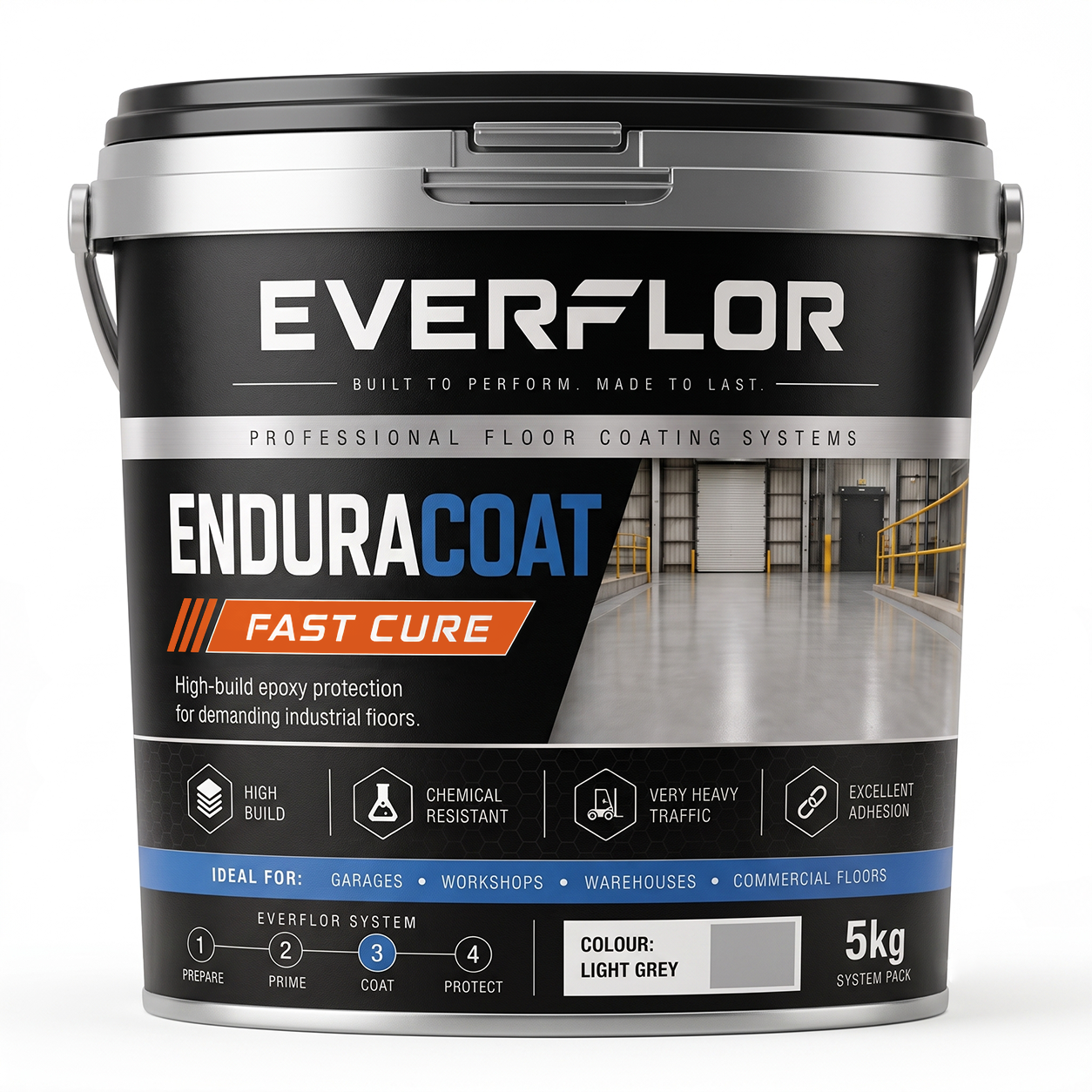
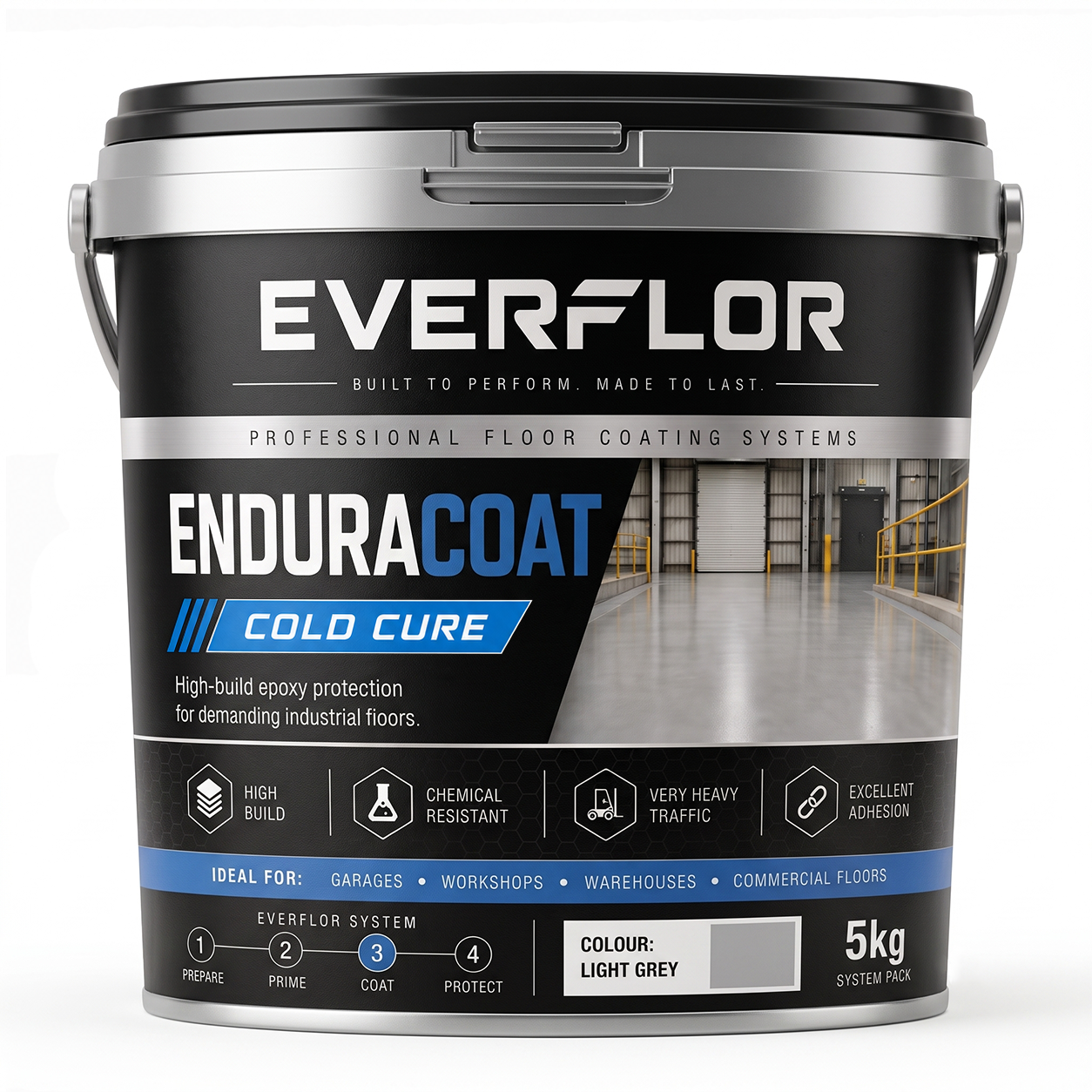
EVEREST Everflor single pack line marking coatings utilise polyurethane, chlorinated rubber, and acrylic technologies depending on the application environment. These formulations provide reliable adhesion to prepared concrete and asphalt substrates while maintaining colour visibility and abrasion resistance for routine operational use.
Because they require no mixing prior to application, single pack marking systems are often selected for maintenance work where simplicity and speed of application are priorities.
Suitable Substrates & Surface Preparation
Concrete and asphalt are the primary substrates for line marking systems. Correct surface preparation is essential to ensure markings adhere properly and maintain durability under traffic exposure.
Concrete surfaces should be clean, dry, and free from dust, oils, grease, or curing compounds before applying line markings. Contaminants can interfere with adhesion and lead to premature wear. Where surfaces are particularly smooth, light abrasion may improve coating adhesion.
Asphalt substrates must be stable and free from loose aggregate or surface oils. Newly installed asphalt may require a curing period before coatings are applied, as residual binders within the surface can affect adhesion.
Any previous markings that are deteriorated or poorly adhered should be removed prior to repainting. Sound existing markings may sometimes be recoated after cleaning and light abrasion to improve intercoat bonding.
Proper preparation ensures the line marking coating bonds directly with the substrate and maintains durability under operational conditions.
Performance Characteristics & Limitations
Single pack line marking coatings provide visible and durable markings capable of withstanding routine pedestrian traffic and light vehicle movement. The coating film must maintain colour clarity while resisting gradual abrasion from tyres and footfall.
Polyurethane-based marking paints can provide improved abrasion resistance and film durability for environments where markings experience moderate wear.
Chlorinated rubber coatings are commonly used for both internal and external line marking due to their practical durability and relatively quick drying behaviour.
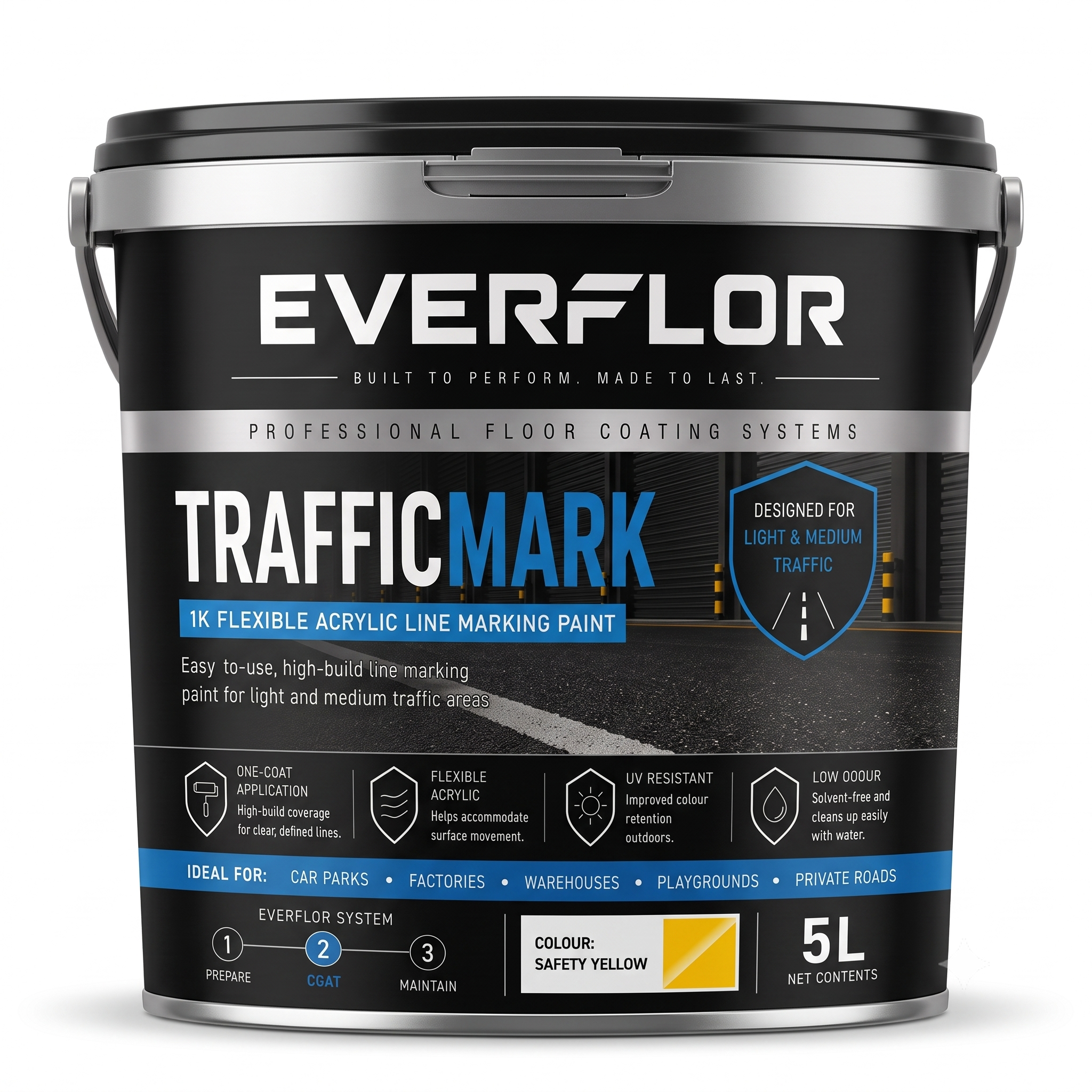
Acrylic marking paints are often used where ease of application and lower odour are desirable, particularly in environments requiring routine maintenance marking.
Despite these advantages, single pack line marking systems generally provide lower durability compared with two-component resin marking coatings. Continuous heavy vehicle traffic, frequent forklift movement, or highly abrasive environments may exceed the performance limits of these systems.
Internal vs External Considerations
Single pack line marking paints may be used in both internal and external environments depending on the selected formulation.
Internal environments such as warehouses, factories, and storage facilities often require markings that can withstand pedestrian movement, pallet trucks, and occasional vehicle traffic while maintaining colour visibility.
External areas including car parks, service yards, and roadway markings introduce additional exposure to weather, UV radiation, and surface moisture. Chlorinated rubber and acrylic marking systems are commonly used outdoors due to their weather resistance and practical curing characteristics.
Environmental exposure and traffic intensity should always be considered when selecting the most appropriate marking system.
Selection Guidance & When to Specify Alternatives
Single pack line marking paints are typically specified where straightforward application and routine maintenance marking are required. They are commonly used for traffic guidance, pedestrian walkways, parking bay delineation, and safety zone identification across commercial and light industrial environments.
These systems provide a convenient solution for repainting worn markings or applying new safety lines without the complexity of multi-component systems.
However, in environments subjected to continuous heavy vehicle traffic, forklift movement, or severe abrasion, higher performance marking systems may be required. Two-pack epoxy or specialist heavy-duty marking coatings can provide significantly improved wear resistance and longer service life under demanding operational conditions.
Selecting the appropriate marking system should therefore consider the substrate type, traffic intensity, and maintenance interval required to ensure the markings remain visible and functional over time.